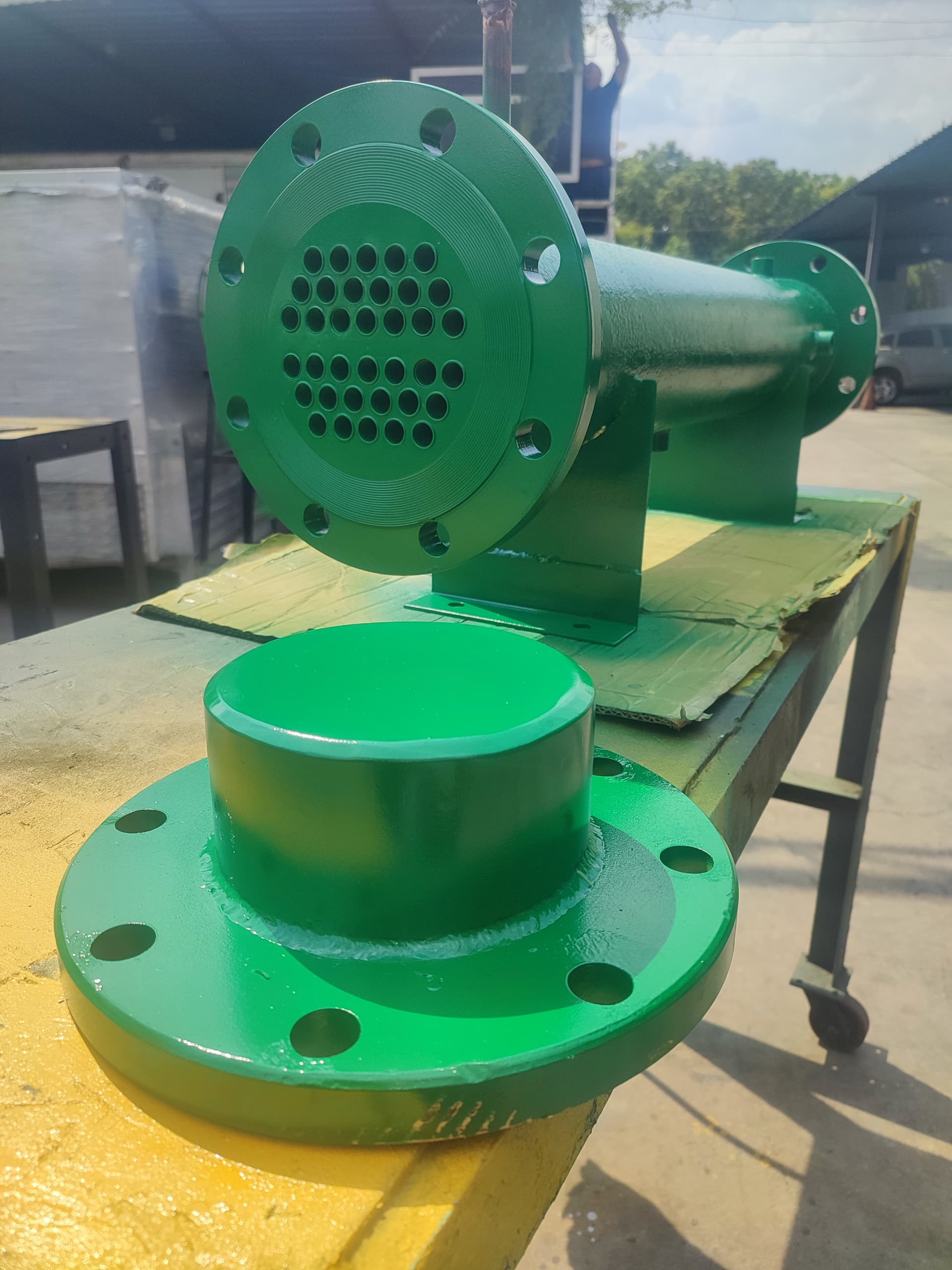
 Marine heat exchangers: how do they work and what are they for?
Marine heat exchangers are essential components in the naval industry, designed to transfer heat between two fluids at different temperatures without them mixing. In the marine environment, their main function is to cool ship systems, using seawater as a heat absorber.
These devices are based on a simple principle: two fluids, in this case, seawater and the fluid to be cooled (such as fresh water in the engine cooling system), circulate through separate circuits within the heat exchanger. Although they are in contact, a physical barrier (usually tubes) prevents them from mixing. The temperature difference between the two fluids causes heat transfer through this barrier, thus cooling the fluid in the internal circuit.
Applications of marine exchangers in the naval industry:
 Engine cooling: They cool the fresh water circulating through the engine, keeping it at an optimal operating temperature.
- Air conditioning systems: They provide the heat necessary for refrigeration cycles.
- Desalination: They are used in desalination plants to transfer heat and facilitate the evaporation process.
- Space heating: In some cases, they can be used to heat interior spaces using waste heat from the engine.