Description
What makes marine heat exchangers so special?
Corrosion-resistant materials: Seawater is highly corrosive. Therefore, marine heat exchangers are manufactured with special materials, such as copper-nickel or titanium alloys, capable of withstanding this harsh environment.
Robust design: Given the importance of this equipment to a ship’s operation, its design must be robust and capable of withstanding the vibrations and high pressures to which it is subjected.
Maintenance: Marine heat exchangers require regular maintenance to ensure their efficiency and prolong their lifespan. This includes cleaning the tubes and inspecting the materials.
There are different types of marine heat exchangers, each with its own characteristics and applications:
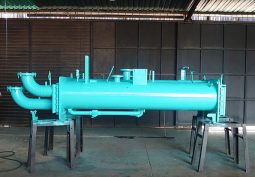
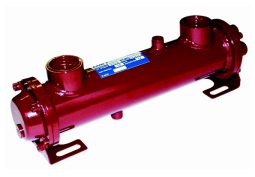
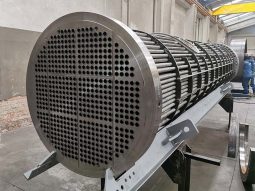
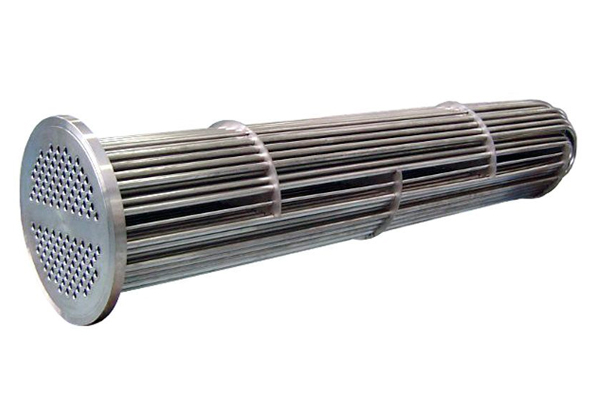
Shell-and-tube: These are the most common and consist of a bundle of tubes housed within a shell.
Plate: These use corrugated plates to increase the contact surface between the fluids.
Spiral: The tubes of both fluids are wound in a spiral, allowing a high coefficient of heat transfer.