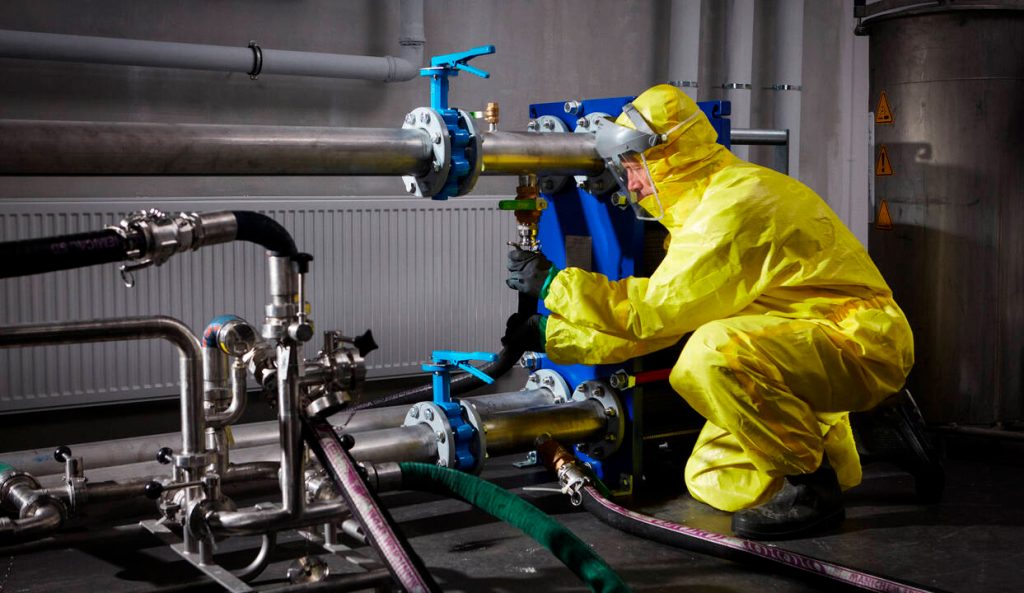
Heat Exchanger for Food Processing
In simple terms, a heat exchanger is like a radiator, designed to heat (or cool) a product. However, over the past 150 years, a wide variety of types and designs have been developed, meaning that finding the most suitable heat exchanger for your application isn’t always straightforward.
All but the most basic heat exchangers are custom-designed to take into account the products being heated or cooled, the heating or cooling medium, the amount of effluent being processed, the velocity, the risk of fouling, and other factors. However, some standard (as well as more specific) design types have emerged over the years, and understanding the differences among them will make the selection process less complex.
In this article, we guide you through the main types of heat exchangers designed by HRS and the applications for which each is best suited.
KEY ASPECTS
When specifying a heat exchanger, the first consideration is whether the application requires complete stainless steel construction for hygienic reasons; for example, in the food and beverage industry.
The first consideration is the nature of the product being processed, particularly its viscosity and whether it contains particles. The simpler and less viscous it is, the simpler the exchanger. As materials become coarser or contain suspended particles or large solids, the exchange becomes more complicated, and more sophisticated designs are required to ensure performance. Starting with simple multi-tube designs, the range moves through double tubes, where viscosity is higher or solids are present, and annular gap designs for highly viscous products, with the most challenging materials (foods containing lumps or very thick, such as honey) requiring the use of scraped surface exchangers.
Another consideration is what happens in the event of a leak. There are cases where a leak can be critical, especially when the service fluid is not water. In such circumstances, double-base multitube heat exchangers should be specified, as they provide leak detection to prevent cross-contamination between service and product fluids.
Source: HRS